
What Does Your “Core” Really Mean?
When you hear the word “core,” what do you think of?
Mostly physical, right?
Maybe you think about the muscles that surround your middle and how they help support your back, create good posture, and help you move with strength and stability.
Oh—and maybe a flat stomach!
There is so much in our culture right now about thinness, looking a certain way, and having a certain body shape that I thought I’d take a different approach to the idea of the “core.”
As you know, I have always taught that being strong and healthy is not about being skinny. If you have ever taken one of my classes or workshops, you know this to be true.
And yet, even I can still be challenged by the messages of “skinny culture”—the idea that we should look a certain way, no matter our age, our body, or our stage of life.
It gets ingrained in us early.
I can remember being about 12 years old and looking at my stomach and thinking I was fat.
Now, I don’t know about you, but anytime I look at a picture of my younger self, I think:
I WAS NOT FAT!
I looked amazing. Strong. Healthy. And yet I couldn't see it.
Can you relate?
So, when I started thinking about the “core”—which has been on my mind a lot lately as I’ve been working through a back injury—I began wondering:
What if our core is about so much more than our stomach muscles?
What if the teachings of yoga and Ayurveda can help us understand the core in a much deeper way?
These ancient wisdom traditions invite us to look beyond the physical body and remember that we are multidimensional beings—physical, energetic, and spiritual.

The Core and Our Physical Body
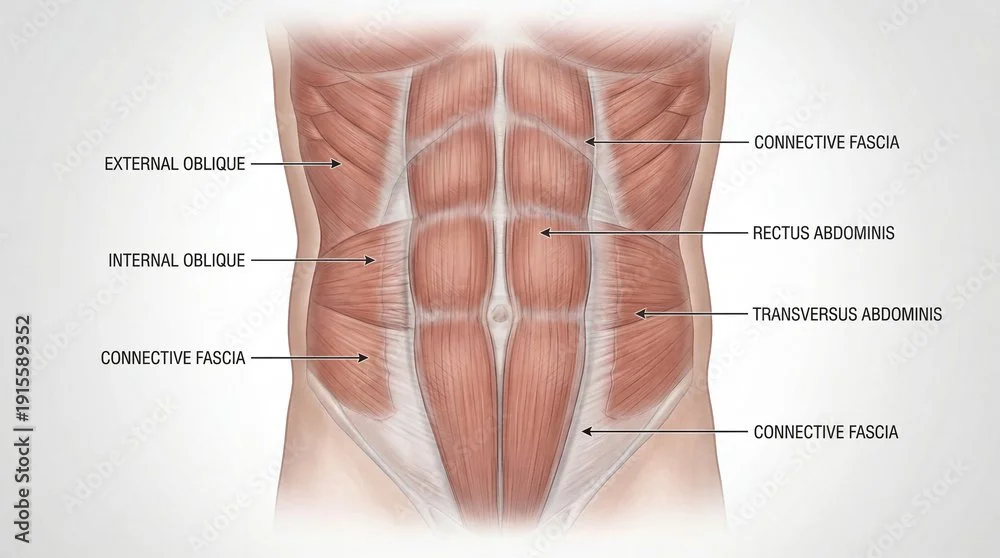
From a physical perspective, the core is much more than your abdominal muscles.
Think of it as a supportive cylinder that extends from your pelvic floor at the base to your respiratory diaphragm at the top. It includes the deep abdominal muscles, muscles around the spine, the pelvic floor, the diaphragm, and even the gluts!
Together, these structures help create stability and support for the entire body.
Your core also acts as a bridge between your upper and lower body, helping you find balance, coordination, and efficient movement—not just during yoga, but in everyday life.
Standing. Walking. Getting out of a chair. Carrying groceries. Reaching for something on a shelf.
A strong, functional core helps us move through life with greater ease.
And importantly, a strong core isn't about how your belly looks.
It’s about how well your body supports you.
The Core and Our Energetic Body
Now let’s take this idea a little deeper.
In yoga, we often work with the concept of bandhas, which are energetic “locks” or supportive actions used to help direct and contain energy within the body.
One of these is Uddiyana Bandha, often translated as the “upward lock.” It is associated with an energetic lifting and drawing inward through the center of the body.
I like to think of the bandhas as an invitation to become more aware of our center.
When we gently connect with our core, our movements can begin to feel more supported, steady, and buoyant.
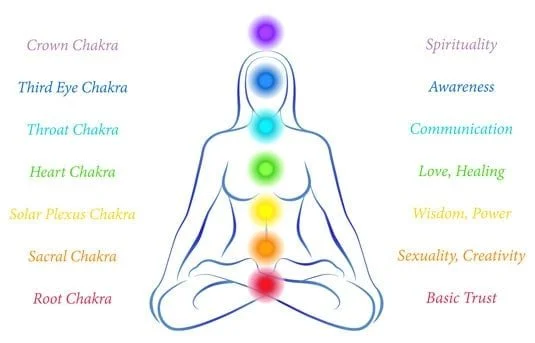
The core is also traditionally associated with the solar plexus chakra, Manipura.
In yoga philosophy, Manipura is connected with qualities such as personal power, confidence, determination, and will.
Chakras are traditionally described as energy centers within the subtle body, each associated with different physical, emotional, and psychological qualities.
I love this teaching because it reminds us that our physical body and our inner experience are not separate.
How we stand can affect how we feel.
How we breathe can affect how we move.
How we move can affect how we experience ourselves.
It’s all connected.
The Core and Our Spiritual Body
And then we can take the idea of “core” even deeper.
In Ayurveda, there is a beautiful word: Svastha.
Sva means “one’s own self,” and stha means “to stay,” or “to be established.”
So, svastha can be understood as being established in oneself—situated in your own true nature.
I love this.
Because when I think about the “core” this way, it becomes about so much more than the physical body.
It becomes about coming home to yourself.
Being grounded in who you are.
Listening inward.
Remembering what matters.
Standing firmly in your own wisdom.
And perhaps even asking:
What does it mean for me to be truly situated in myself?
What do I need to do to reconnect with that deeper part of myself?
How can I use my physical core as a reminder that I am so much more than what I see in the mirror?

Coming Back to Your Core
This is where the teachings of Ayurveda can be so helpful.
Ayurveda teaches us that our daily practices shape our health, our energy, and our awareness.
What we do affects how we live.
We don't need to make huge changes or create another complicated routine.
Instead, we can bring small moments of awareness into our everyday lives.
So when we contemplate the idea of our “core,” we can infuse our day with simple practices that help us reconnect—to our bodies, our breath, our strength, and ultimately, to ourselves.
And yes, maybe we become a little stronger along the way, too!
Here are three simple practices you can begin incorporating into your day.
They aren't meant to be hard.
They are meant to bring awareness to your inner core and help you connect with yourself from the inside out.

Practice #1: Diaphragmatic Breathing + Core Awareness
Begin by lying comfortably on your back with your knees bent and your feet resting on the floor.
Place one hand on your belly and one hand on your lower ribs.
As you inhale, allow the breath to expand gently into the ribs and abdomen.
As you exhale, notice the natural drawing inward of your lower abdomen without gripping or forcing.
The goal isn't to suck your belly in.
It’s to feel your breath, feel your center, and begin to connect the two.
In yoga, this kind of awareness can become a foundation for exploring the deeper practices associated with Uddiyana Bandha.
Practice #2: Finding Neutral Spine
Your neutral spine is not a perfectly straight spine.
It is the place where your spine can feel balanced, supported, and at ease.
Try this while standing.
Stand in a neutral position. Feel your feet on the ground.
Soften your knees.
Rock your pelvis settling somewhere between tucking tailbone under and pushing belly forward.
Let your ribs stabilize over your pelvis.
Allow your head to balance easily over your spine.
Then take a breath.
Notice how different it feels when you aren't holding yourself up with unnecessary tension.
This is core support—not rigidity.
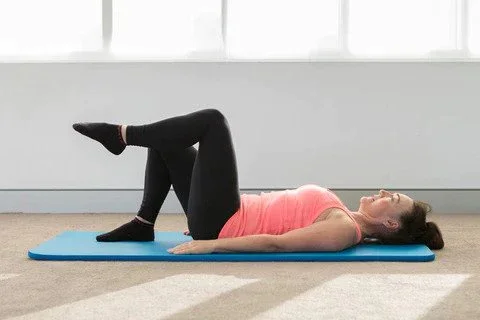
Practice #3: Supine Modified Dead Bug
Lie on your back with your knees bent and your feet on the floor.
Gently engage your core by connecting with your breath and maintaining a comfortable, neutral spine (just like standing only use the floor to find neutral)
From there, slowly lift one foot and then the other into a tabletop position—only if that feels comfortable and appropriate for your body.
You can begin by simply holding this position and breathing.
As you become more comfortable, slowly lower one foot toward the floor and return it to tabletop. Then switch sides. When this becomes easy add reaching the opposite arm back as you lower the leg.
The movement should be slow, controlled, and pain-free.
Remember, the goal isn't to do more.
The goal is to build awareness, coordination, and support.
Your Core Is More Than Your Core
Perhaps this is the bigger lesson.
Your core isn't just about your abs.
It's not about having a flat stomach.
It's not about looking younger or thinner.
Your core is about support, connection, strength, balance, and coming home to yourself.
And maybe, as we move through different seasons of our lives, that's exactly what we need.
Not another standard to live up to.
But another way to come back to ourselves.
Strong from the inside out.